Justices Appear to Side with Catholic Schools in Colorado Pre-K Admissions Case
The 74
Linda Jacobson ·
The Supreme Court on Tuesday appeared skeptical of a Colorado law that requires state-funded pre-K programs to accept children from LGBTQ families even if it conflicts with their religious beliefs. For two hours, the justices debated a case that could take the court a step further in protecting religious freedom, with the conservative majority suggesting
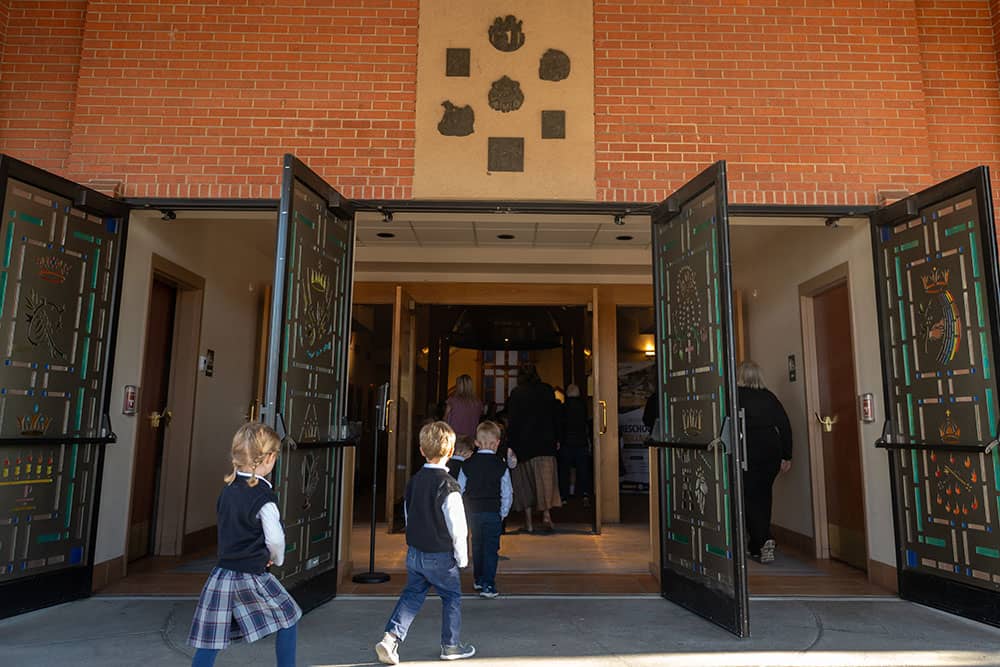
The Supreme Court on Tuesday appeared skeptical of a Colorado law that requires state-funded pre-K programs to accept children from LGBTQ families even if it conflicts with their religious beliefs.
For two hours, the justices debated a case that could take the court a step further in protecting religious freedom, with the conservative majority suggesting that the state should allow Catholic pre-K programs to deny admission to children with same-sex parents.
Helen Norton, the attorney who argued the state’s side, said officials aimed to make preschool widely available to religious families and that providers “remain free to teach their religious beliefs … about sex or gender or marriage,” as long as they adhere to the state’s nondiscrimination law. Some LGBTQ families, she said, might even prefer a nearby Catholic preschool, despite their teachings, because it better accommodates their schedules.
Get stories like this delivered straight to your inbox. Sign up for The 74 Newsletter
But Justice Brett Kavanaugh, one of the six conservatives on the court, said there’s a way to “avoid the clash.”
“Why not seek the win-win?” he asked, by exempting the religious schools from the rule and allowing LGBTQ parents to choose from any of the other 2,000 available programs.
Because the state allows admission preferences for low-income students and kids with disabilities, it can’t close the door on schools that “exist to pass on the faith to the next generation,” said Nicholas Reaves, senior counsel at the Becket Fund for Religious Liberty and the lead attorney for the parents and preschools. Colorado’s mandate accommodates “important secular interests,” he said, but considers its law “a hard limit when petitioners sought a religious accommodation.”
Related Justices to Consider LGBTQ Discrimination and Religious Freedom in Colorado Case
The case, St. Mary Catholic Parish v. Roy , is the latest in an increasing number of cases before the court that weigh the interests of religion against rules the government says should apply to everyone. It’s also the fourth major First Amendment case from Colorado since 2018 dealing with religious exercise. They include a 2018 case in which a baker refused to make a case for a same-sex couple and a challenge last year to a law banning conversion therapy for transgender minors. The court has ruled against the state in all three cases, and one observer doesn’t expect this case to turn out any differently.
“Colorado keeps losing,” said Elliot Regenstein, a partner with Foresight Law + Policy, a Washington, D.C.-based firm focused on education. “This court has been very sympathetic to free exercise rights.”
But Elena Kagan, one of the three liberals on the court, said siding with the preschools would make it even easier for religious groups and individuals to continue to claim that a generally applicable law creates a “substantial burden” on their religious freedoms.
“Why would we put ourselves in the middle of that in all these cases?” she asked. “With respect to public schools alone, these inquiries could go on forever.”
‘Asking for special treatment’
Much of the exchange between the justices and the attorneys focused on which court precedent is most relevant in this case. Colorado officials have leaned heavily on Employment Division v. Smith , a 1990 opinion in which the justices said one’s religious beliefs don’t exempt a person from complying with a law that applies to everyone.
Both Chief Justice John Roberts and Justice Clarence Thomas repeatedly asked the attorneys how this case is different from Carson v. Makin , in which the court said states can’t exclude faith-based schools from choice programs because they practice religion.
In that case, the “court was concerned about treating religious entities worse than everybody else,” said Justice Ketanji Brown Jackson, one of the liberals. But here, the preschools, she said, are asking for special treatment.
“Your school wants to discriminate by exclusion,” she said. “Nobody else is allowed to do that.”
Advocates for LGBTQ students fear a ruling against the state could have negative consequences for all types of families.
“Parents already struggle to find affordable and accessible preschools that work for their family,” said Brian Dittmeier, the director of LGBTQI+ Equality at the National Women’s Law Center. “A ruling that gives license to discriminate could also lead to other family structures being discriminated against in publicly funded programs, including households headed by single mothers, divorced parents and interfaith couples.”
Regenstein, with Foresight, said the court could turn to a third case to decide the outcome — Fulton v. City of Philadelphia . In that opinion, the court unanimously held in 2021 that a Catholic social service agency had a right to exclude same-sex couples from becoming foster parents. In the ruling, Roberts wrote that the nondiscrimination rule didn’t apply to everyone because exceptions were already allowed at the discretion of city officials.
“I don’t think you need to say anything more than you already said in Fulton,” said Reaves, the attorney for the preschools.
Related As SCOTUS Rules For Catholic Adoption Agency, Implications For Religious Schools
Roberts tends to prefer narrow rulings and may go in that direction, said Ryan Gardner, senior counsel at First Liberty Institute, a conservative law firm that represents a Maine church that is suing the state over a nondiscrimination rule similar to Colorado’s. A broader opinion would say that the Smith ruling, which dealt with a law against drug use, never applies to public benefit programs like universal preschool.
Implications for pre-K
However the court rules, the outcome could have significant implications for state preschool programs, Regenstein said. Most states already run their pre-K programs through a mixture of schools and private providers. Some, like Hawaii and California, even have more than one program, allowing a place for faith-based providers.
If the justices side with Colorado, any existing regulations that apply to faith-based providers will remain constitutional, Regenstein and his colleagues explained in an analysis prior to Tuesday’s arguments.
But if the Catholic preschools and the families prevail, states would have to make some decisions about whether to allow faith-based providers to participate on their own terms or rethink whether they include private programs at all. They could, for example, only allow state-funded pre-K programs to operate out of public schools. But such a policy would inevitably spark litigation claiming religious discrimination, they wrote.
“There haven’t been that many high-profile cases about preschools,” he said. “We may be entering an era where in some states, litigation just becomes a part of life for the next few years.”
Source
The 74