Boston post-hardcore band Fiddlehead finds a way forward
WBUR
WBUR ·
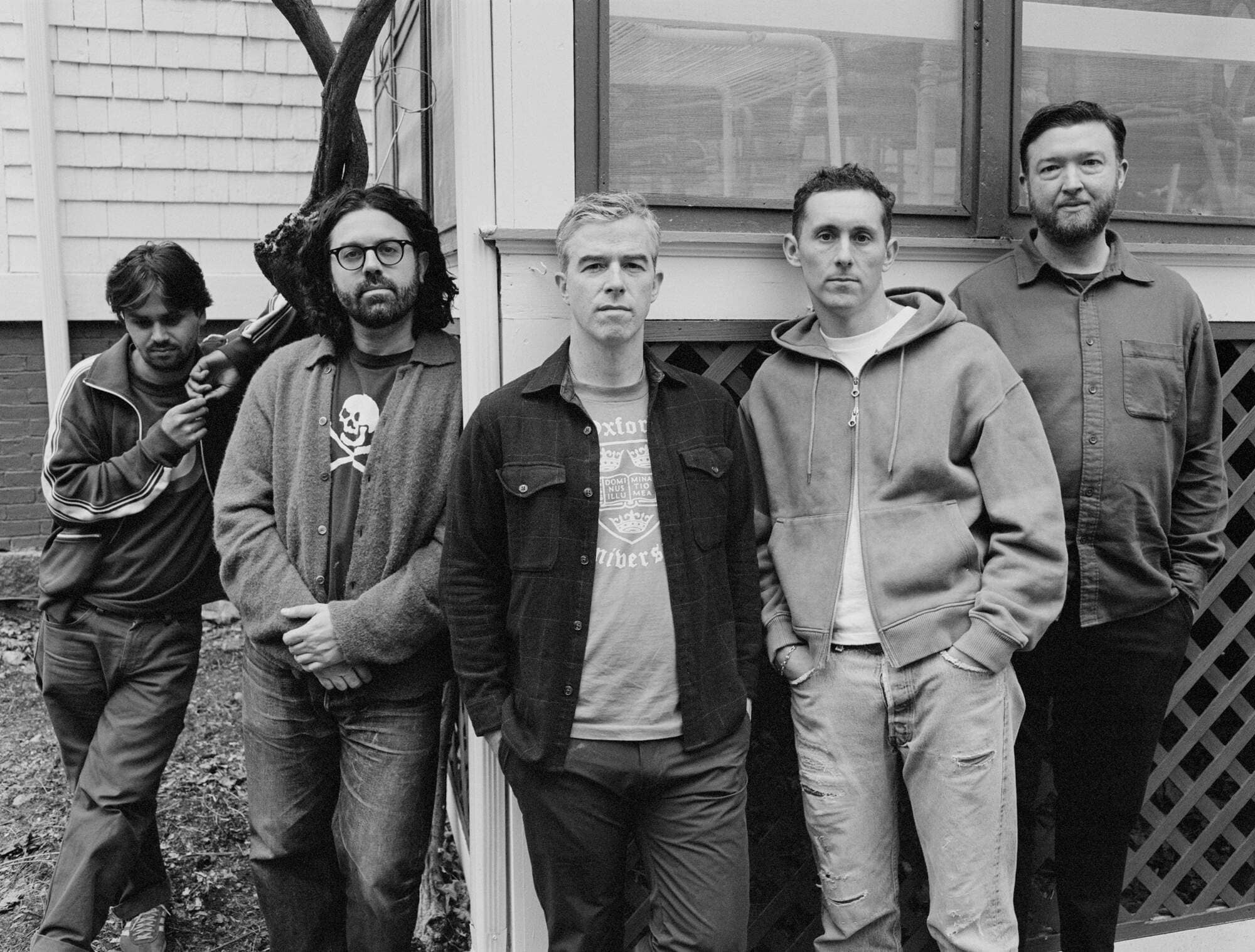
Formed in 2014, the five-piece is known for reanimating lost people and lost times in its music. They have two upcoming performances that mark professional milestones, including opening for the Dropkick Murphys.
People hustled through the Alewife parking garage, periodically checking their phones and pulling their jackets tight to keep out the encroaching autumn air. Bodies merged at the entrance and then surged into the lobby and down the escalator toward the turnstiles. It resembled a normal weekday scene, except it was Sunday and no one was there to catch trains — they were there for a Fiddlehead show.
Anyone familiar with the Boston post-hardcore band would understand. Fiddlehead , whose members prioritize wellbeing over full-time touring and recording, play only when life compels.
On this day, the five-piece entered Alewife, busking permit in hand and weeks of doling out Dunkin’ gift cards to MBTA workers behind them, to perform a single song, the recently released “Baby I’ll Change,” written in honor of hardcore promoter Jimmy Flynn, who passed in December 2023. Fiddlehead guitarist Alex Dow dropped Flynn at Alewife weeks before his death; it was the last time they shared the same air.
“It felt like perfect timing,” said Dow. “The band is sort of scattered, but we were all in town that weekend. It felt meant to be.”
One song became six as folks gathered, tipped off via Instagram. Dow and fellow guitarist Alex Henery crosshatched the dead space, joined by Nick Hinsch on bass and Shawn Costa on drums. Vocalist Pat Flynn — no relation to Jimmy Flynn — communed with the crowd, contorting as if trying to escape his body, his barely amplified voice rising just above the din of the space. It didn’t matter because everyone knew the words and screamed them.
“When someone passes, they’re gone and it’s such a theft, but when you’re making music, something is entering,” said Flynn. “You shove them back in and now they’re moving people at a train station — the spirit of the person has come back into the room, back into the equation.”
Fiddlehead is known for reanimating lost people and lost times, authoring music that fiercely plumbs the rock bottom — death, depression, loneliness — and then rockets upward toward something like healing, acceptance, or at least remembrance. The band emerged in 2014, with every member bringing scene bona fides, notably Henery, a veteran of the U.K. group Basement, and Flynn, who fronted the beloved Boston hardcore group Have Heart for years before it amicably disbanded in 2009.
The straight edge, “constructivist” ethos that characterized Have Heart transferred to Fiddlehead. So too did the hard-earned understanding that ended Flynn’s former band — that making art should make way for living life, not the other way around. Flynn’s preoccupation with loss stayed as well, but found room on an expanded sonic canvas that accommodated more sophisticated sounds: diverse dynamics, fluid guitar lines, varied vocal deliveries. Three albums — “Springtime and Blind” (2018), “Between the Richness” (2021) and “Death is Nothing to Us” (2023) — released on the Boston label Run For Cover Records and intense live appearances showcased a band with deep reserves of creativity and empathy.
“Before Fiddlehead started, I never thought I’d be able to connect with people on that same kind of musical level,” said Henery. “Songs just started coming naturally and I was shocked. There’s a really special bond we have musically and creatively and that keeps pulling us back.”
With the last moments of “Poem You,” an ode to Flynn’s late father, reverberating throughout Alewife, the crowd turned toward a handcart marked “Sully’s” filled with free shirts. After some jostling — ”There’s f---ing kids here,” someone shouted — merch began flowing to outstretched arms.
Chris Wrenn launched the business that became Sully’s in the late 1990s to fund his hardcore label, Bridge Nine Records. Wrenn is deeply familiar with Flynn and the Fiddlehead diaspora, as his label released most of Have Heart’s catalog. He remembers recruiting Flynn to sell Sully’s gear outside Fenway during Red Sox games. Nowadays, the two often find themselves representing the Boston scene.
“In the early 1980s, there was a disconnect between bands like SSD and Mission of Burma, and I feel like Pat has one foot in each camp,” said Wrenn. “I’ve said before that Pat is our Ian MacKaye, Have Heart being his Minor Threat and Fiddlehead being his Fugazi. Maybe no one should be compared to MacKaye in terms of influence, but for us, he’s the closest thing.”
The Washington, D.C., hardcore parallels were also apparent to Run for Cover Records founder Jeff Casazza. After Fiddlehead’s first EP “Out of the Bloom” dropped via Lockin’ Out Records in 2015, Casazza came away “extremely impressed.”
Today, Casazza counts Fiddlehead among the growing number of hardcore and hardcore-adjacent bands opening their communities to more people, while holding close to their artistic and personal values.
“Fiddlehead isn’t lighthearted or ‘fun,’ but they are great and a band that truly walks the walk,” said Casazza.
The band members travelled to Asheville, North Carolina, to record “Baby I’ll Change” and the two other tracks, “The Dogs” and “Porchlight,” from their latest EP, released in June. Times were tough for Flynn, who had recently lost his mother. The scenario somewhat mirrored their founding, which had unfolded following the death of Flynn’s father. And the sessions were a microcosm of Fiddlehead’s history — five friends processing human frailty by making something sad, beautiful, and lasting.
Jimmy Flynn inspired “Baby I’ll Change,” named after one of the promoter’s catchphrases. The song captures a promising existence shortened by addiction: “All the right seeds were planted in me; a perfect soil, so fertile and green. When you're in the field, all purple and gold; look for me in the flowers that just won't grow.”
A Pat Flynn voice note with germinal lyrics and acoustic guitar started it. In the studio, Dow and Henery brought bright, chiming guitar textures to counterbalance the darkness and Flynn rasped the words as if hard to say.
“I don't want to live in this constant spiral — I’d like to do something with the pain, I’d like to channel it somewhere,” said Flynn. “I’m very lucky to be playing with these guys. The sounds they generate are really in lockstep with what’s in my head.”
It came together quickly, per Henery. “Honestly, it's very rare that I've had that experience as a musician where a song just comes out of nowhere and instantly you're just compelled,” he said. “I think we all knew that there was something special.”
In September, Fiddlehead shared a bill with alternative rock veterans Dinosaur Jr. The experience left an impression and provided a glimpse of times to come.
“We watched them pull up in their passenger vehicles, just like us — production trucks and then, like, Lou Barlow in a minivan,” said Dow. “It was cool and pure.”
“That’ll be us,” said Henery.
The band’s immediate future holds two weighty performances: A Nov. 13 date at the Roadrunner with Basement; and a March 12 date at MGM Music Hall during the Dropkick Murphys’ Boston Homestand. The shows mark professional milestones to be sure — the joining of two creative paths, the recognition of years spent supporting and expanding a rich subculture. But they’re also freighted with personal significance, particularly the date with the Dropkicks.
Dow’s godmother, Tricia O’Neil, painted the famous Southie mural honoring the band and introduced him to the local music scene that shaped his life. For Flynn, the band served as a point of connection with his late father, a retired U.S. Army officer with deep Irish heritage and Irish nationalist leanings.
“He was so overjoyed because I was listening to some Irish-themed music with bagpipes playing,” said Flynn. “And from that point on, my father was way less of a lieutenant colonel about my music choices and thought I was on to something that was rooted in real social meaning.”
Source
WBUR