Question 3: Mass. voters opt to keep partisan state primaries
WBUR
WBUR ·
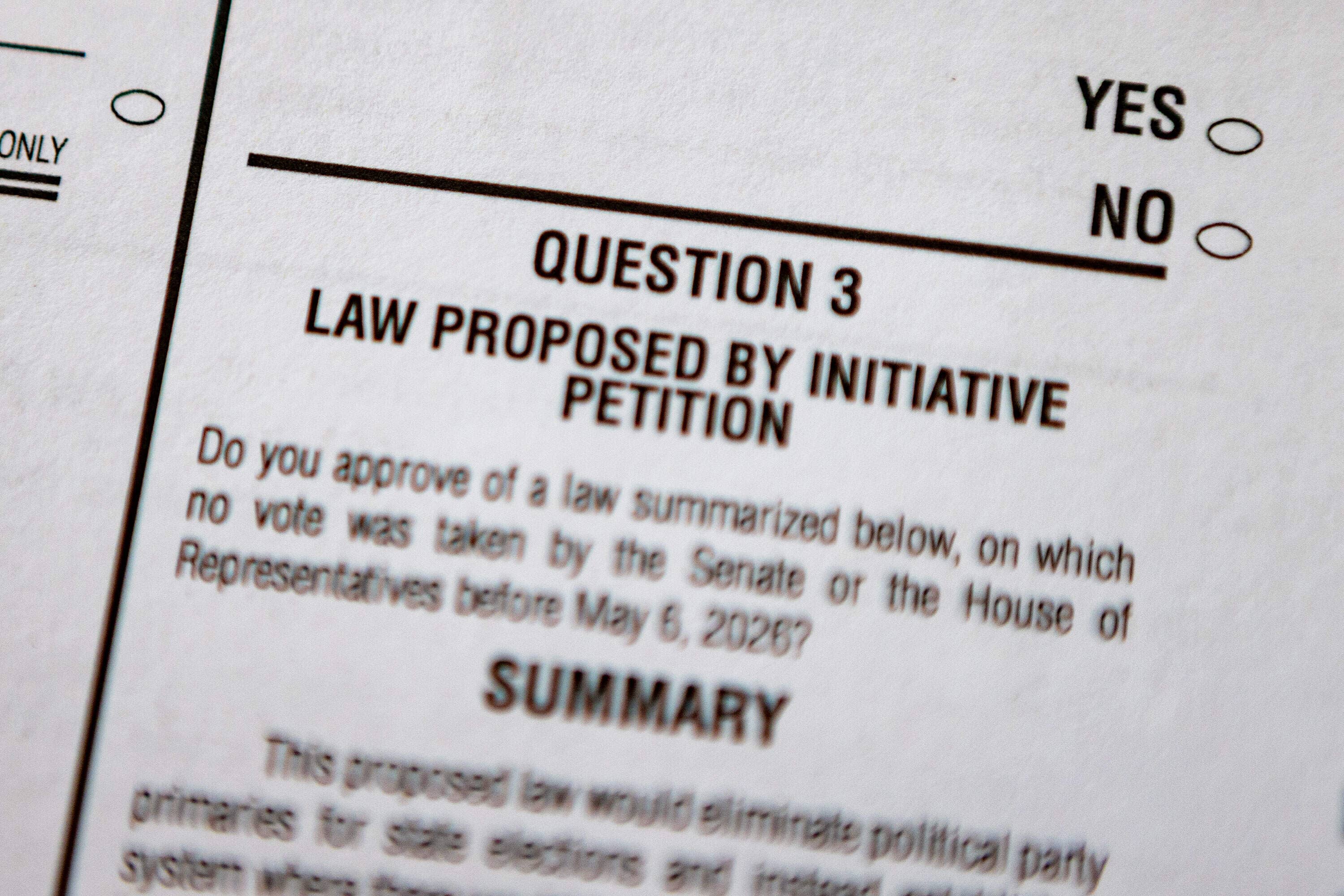
Supporters of the ballot question had urged voters to back a swap to what are called "all-party" primaries or "top-two" primaries as a solution to Massachusetts' dearth of competitive elections. Opponents, meanwhile, had countered that all-party primaries would hurt independent candidates.
Support WBUR
Massachusetts voters rejected Question 3 on this year's ballot , which would have ushered in a new state primary election system.
The Associated Press called the race early Wednesday morning. Of the state's record-tying nine ballot measures this election, Question 3 was one of the few nail-biters. Two polls released in mid-October, as hundreds of thousands had already cast mail-in or early ballots, revealed shrinking margins between the two camps.
Supporters of the ballot question had urged voters to back a swap to what are called "all-party" primaries or "top-two" primaries as a solution to Massachusetts' dearth of competitive elections for statewide, congressional and state lawmaker offices.
Supporters of Question 3 issued a statement Tuesday night lamenting the loss.
"The people of Massachusetts want real choices in November and elected officials who have to work to earn all of our votes. That frustration doesn't go away tonight," the statement read.
Opponents, meanwhile, had countered that all-party primaries will hurt independent candidates and favor those with deep pockets who can out-advertise a crowded field.
Had the measure passed, every candidate for an elected office would've faced off against one another in the same primary — and the top-two vote-getters out of that contest would then throw down in the November general election.
Instead, Bay Staters will winnow candidates in partisan summer primaries, where voters registered with a major party may cast ballots in their respective Democratic or Republican races. Only unenrolled voters get the option of pulling either party ballot.
The ballot measure was filed by one-time gubernatorial candidate and Harvard professor Danielle Allen. In her summary for the state's red book voter guide on behalf of the "yes" campaign, she told voters that Question 3 would bring greater "accountability and transparency to Massachusetts politics."
"Many elections are over before most of us ever cast a ballot," she wrote. "Candidates can be blocked at party conventions. Today, two-thirds of the legislature is running unopposed.
"More competition means more accountability," she added. "Legislators who know voters can replace them listen to us and deliver real results."
Vanessa Snow, who wrote the "no" campaign's summary for the red book, rejected the idea that voters would end up with more choices.
"This proposal would limit voter choice by allowing only two candidates to advance to November — even if they belong to the same party — reducing competition, lowering voter participation, worsening inequities, and narrowing debate."
California and Washington are the only states with all-party primaries for statewide and congressional elections.
2026 Election 2026 ballot questions
Lisa Creamer Managing Editor, Digital News & Audience
Lisa Creamer is WBUR's managing editor for digital news.
More…
Support WBUR
Support WBUR
Listen Live
Source
WBUR